
Gahanna City Directory Collections and Access
Columbus Metropolitan Library provides the core public shelf for Gahanna city directory research. Its digital City Directory Collection says its holdings date from the 1840s, while digitization remains in progress. That is a useful starting point, not a promise that every year is online or that every volume centers Gahanna. Search the digital collection first, then ask the Library to check its catalog, physical volumes, and any reverse-directory material for the needed year.
| Collection | Documented span or scope | Where held | Access route |
|---|---|---|---|
| City Directory Collection | Holdings dating from the 1840s; digitization in progress | Columbus Metropolitan Library Digital Collections | Search online items, then consult the catalog or history staff for missing years. |
| Franklin County telephone directory | 1932 item expressly includes Gahanna | City Directory Collection | Read the scanned subscriber directory and its item description. |
| Franklin County telephone-directory items | 1928, 1932, 1936, and 1944 confirmed for Gahanna | Columbus Metropolitan Library collection | Use the individual cataloged items rather than assuming a continuous run. |
| Columbus city directories | Annual directories begin in 1841; street-address section begins in 1911 | CML Local History & Genealogy | Use as regional context, with the Library's corporate-limits caution in mind. |
| Gahanna History Collection | Growing local-history books and documents | CML My History partnership collection | Use OCR keyword search and collection browsing for context. |
The central limitation is coverage. A digitized miss may mean the volume is not online, a year was not issued, or the item chose a different geographic scope. It does not prove a person was absent from Gahanna. A telephone directory is also a subscriber list, not a population count.
See the Columbus Metropolitan Library City Directory Collection before choosing a year or a search term.
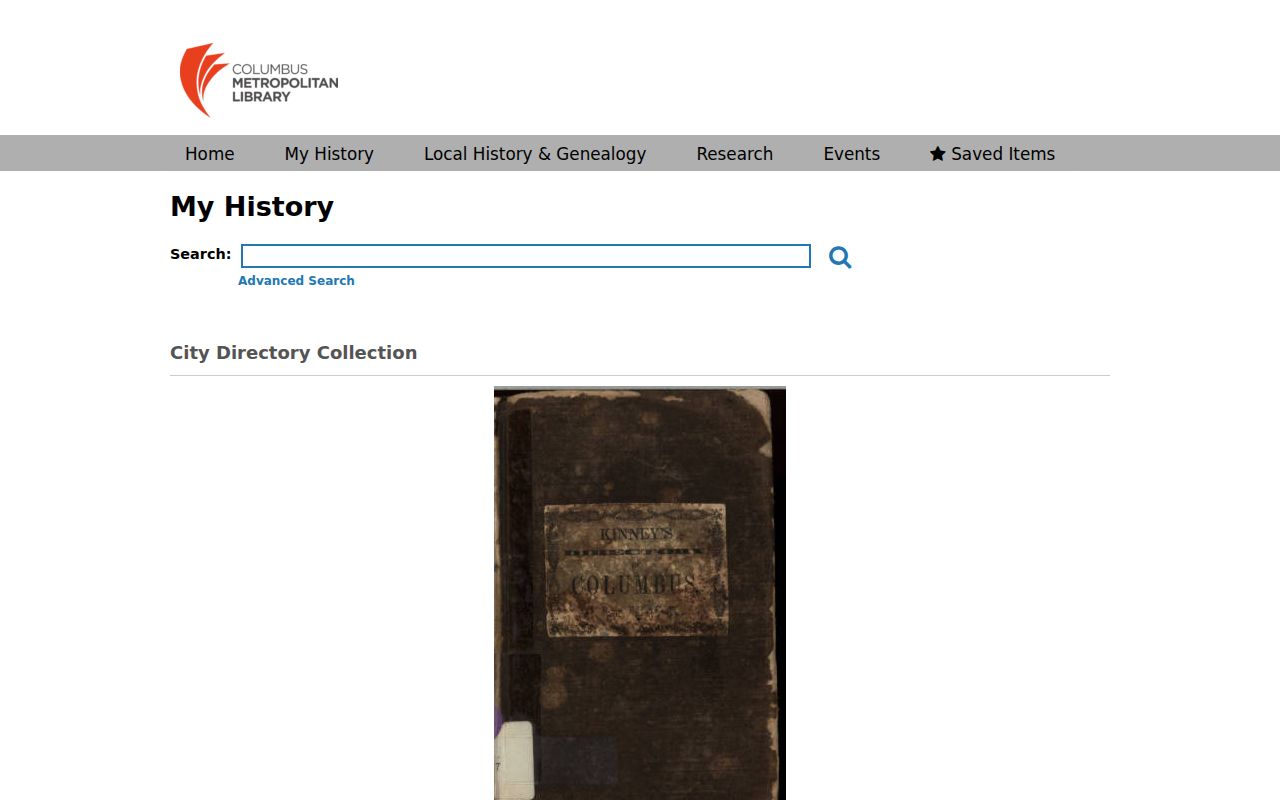
The collection landing page makes the incomplete digitization status visible, which is why the Library catalog and desk remain part of a careful Gahanna search.
Gahanna City Directory Help at the Main Library
Columbus Metropolitan Library Local History & Genealogy at the Main Library, 96 S. Grant Avenue, is the main public research room for this Gahanna material. Browsing does not require an appointment. The Library also offers booked one-hour consultations for genealogy, local history, and address-history questions, as well as Ask a Librarian assistance. Licensed tools should be checked at the desk because the Library identifies Ancestry Library Edition as in-library use only.
Bring the name variants, an approximate date, and any known street or community label. That gives staff a way to distinguish a Gahanna question from a Columbus-only volume and to identify a useful physical source when an online result is thin.
The Library's History & Genealogy service describes its current consultation and research options.
For Gahanna city directories, staff help is especially valuable when a desired year is physical, a catalog record lacks a clear scope, or an address section needs to be checked in person.
Note: A library database or digitized item is an access route, not proof that every person or address appears in its pages.
Gahanna City Directory Telephone Listings, 1928 to 1944
For direct Gahanna mentions, the confirmed Franklin County telephone directories are a strong layer: 1928, 1932, 1936, and 1944. The 1932 Franklin County Ohio Bell Telephone Directory is cataloged as a directory and genealogy item, and its description names Gahanna among the communities it covers. It describes subscribed households and businesses, so a missing name cannot show that a person did not live in Gahanna.
The 1944 item supplies an important gap note: no Polk city directory was printed that year. That is a reason to use the telephone-directory item for that date, not a reason to fill the gap with an invented directory run.
Open the 1932 Franklin County telephone directory record to confirm its catalog description and search within the item.
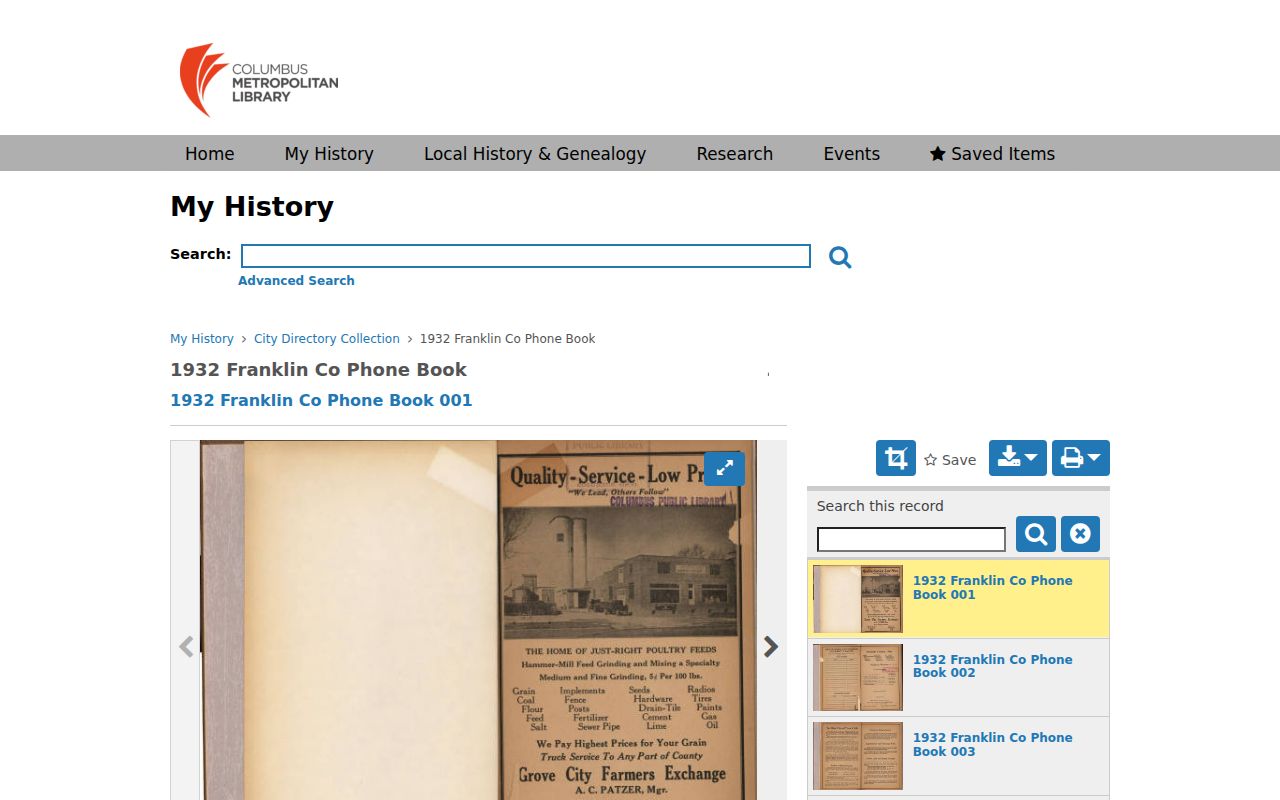
The 1932 item is useful as a dated subscriber source, but it should stay labeled as a telephone directory when notes are compared with a deed, census, or obituary.
Reading a Gahanna City Directory Listing Carefully
A historic Gahanna city directory line must be read from the volume in hand. The research record did not provide a legible individual Gahanna entry or a front-matter key that could support a fabricated sample. Instead, inspect the title page, geographic statement, and abbreviation pages first. Record only the fields that are actually printed, and preserve the difference between an occupant or subscriber and a recorded property owner.
| Name or subscriber | Copy the spelling as printed, then note initials, nicknames, and prior surnames as separate search variants. |
|---|---|
| Address | Capture the printed address exactly and check whether the volume identifies a city, county, or broader service area. |
| Organization or occupation | Use this only if the individual volume prints it. It can help distinguish same-name people, but it is not promised in the telephone-book metadata. |
| Spouse or widow wording | Keep any notation exactly as printed and test it against another dated source rather than treating it as a final conclusion. |
| Ownership mark | Do not assume an ownership symbol exists. Check the volume's own key before assigning meaning to a mark. |
- Criss-cross directory
- An address-ordered section in a volume that reverses the usual name-to-address question. CML says to verify a particular reverse volume by its cataloged date.
- Householder index
- An index labeled for household heads in a particular publication, if the publisher supplied one. It is not a feature promised for every Gahanna source.
- Abbreviation key
- The publisher's explanation of shortened terms and symbols, usually near the front matter. Read it before interpreting a line.
Gahanna City Directories Have a Columbus Boundary
CML's House History guide says the annual Columbus city directories begin in 1841 and gain a street-address section in 1911. It also cautions that those directories primarily follow Columbus corporate limits. That makes the collection valuable for a Gahanna family that appears in the regional record, but it does not create a complete Gahanna street directory or a continuous reverse list for the city.
Use the separate Gahanna telephone-directory items when the question needs an explicitly named Gahanna source. For an older address that no longer matches a modern parcel, the City keeps permanent certified-address, plat, and annexation materials through its records program. The address trail should be checked before a geographic mismatch is called a missing household.
Note: A Gahanna name in a Columbus directory can be a useful regional lead, but the volume's stated coverage controls how far it reaches.
Trace a Household Through Gahanna City Directories
Family history is stronger when each Gahanna city directory result is treated as one dated observation. Start with a precise printed line, then use adjacent volumes and independent records to test a move, a disappearance, or a changed spelling. Census schedules and recorded documents answer different questions, so their dates and labels should remain separate in the research notes.
- Search the first known surname, then repeat with initials, nicknames, and prior surnames.
- Record the exact printed line, the volume date, the collection name, and its stated geographic coverage.
- Check neighboring directory or telephone years for a changed address, a new notation, or a missing entry.
- Pair the dated directory trail with a released federal census, currently available through 1950, to test household context at the census date.
- Use a deed, Probate record, obituary index, or newspaper item to test the next historical question instead of guessing from a disappearance.
An old entry cannot verify a present location. When a historical name needs a current official check, use the Gahanna resident lookup route and keep the dated directory evidence in its own category.
Gahanna History Collection and City Directory Context
The Gahanna History Collection adds local context that a city directory may not contain. It is a partnership of the City of Gahanna, the Gahanna Historical Society, and CML, with digitized local-history books and documents that can be searched through OCR. CML My History also provides a Search Term field, Images Only and Text Only controls, Advanced Search, and browsing by collection or neighborhood.
The Gahanna Historical Society has preserved artifacts, publications, photographs, and documentary material for more than 60 years. It directs researchers toward CML My History and is a historical source contact, not a public directory of people. Its documented contact route is 106 S. High Street or P.O. Box 30602, Gahanna, OH 43230, and gahannahistory@gmail.com.
Visit the Gahanna Historical Society for its local-history contact information.
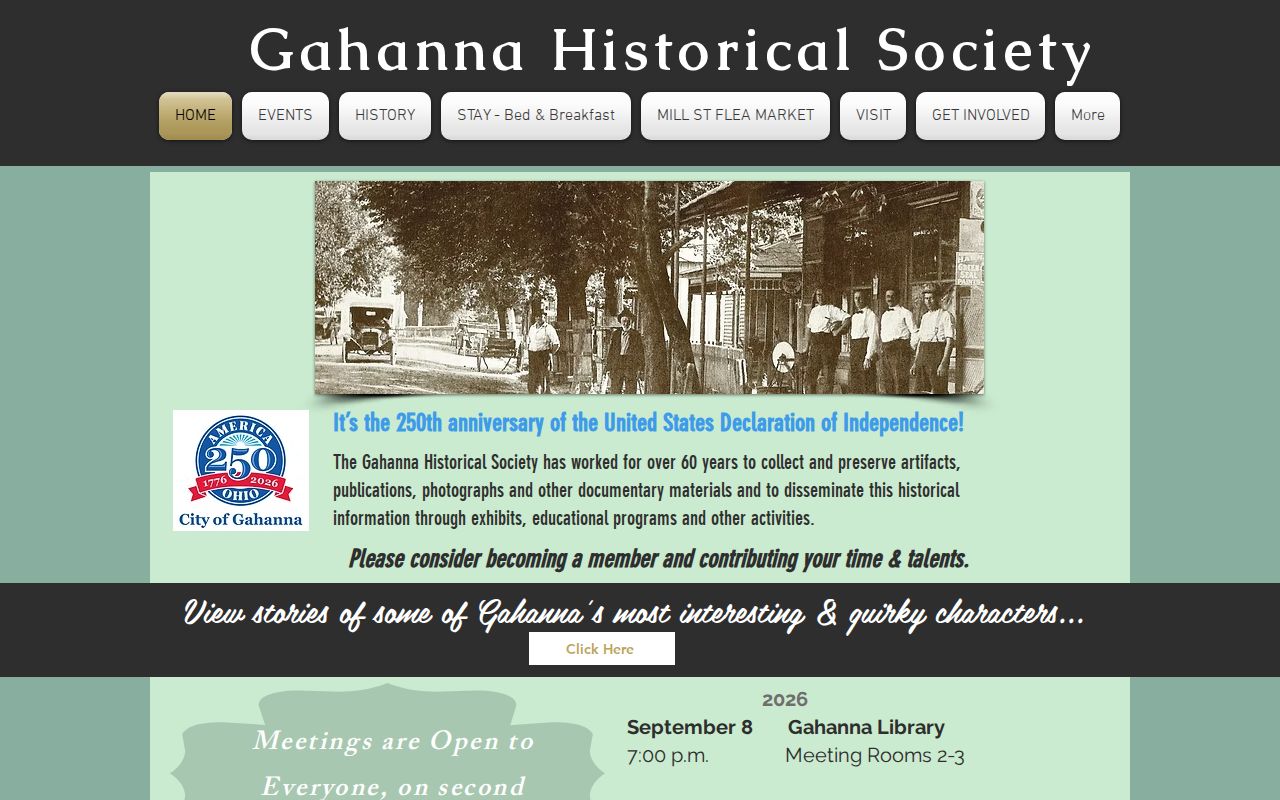
Its historical collections can help explain a Gahanna name, institution, or locality mentioned beside a directory line without turning an old reference into a current-person claim.
Gahanna City Directory Follow-Up Sources
After a Gahanna city directory trail ends, CML's Columbus News and Obituary Index can provide selected Franklin-area article abstracts from 1960 to 1997 and obituary coverage from 1931 to 1997, with older browse groupings. An index result points to a newspaper item that should be retrieved and checked. The Library also directs obituary-copy requests through its history and genealogy path.
For a missing historic death record, Ohio History Connection supplies an online index for state death certificates from 1913 to 1944 and 1954 to 1970, plus Columbus Board of Health deaths from 1904 to 1908. Its archive and research guide are the fallback when a searchable index is negative. Franklin County Probate contributes marriage records from 1803 and estate, guardianship, and name-change records from 1898, with older material sometimes held as hard copy, microfilm, or microfiche.
Note: A news index hit or a directory entry identifies a research lead, so the underlying item and its date should be verified before relying on it.
Gahanna and Bridgeport Before the Directory Trail
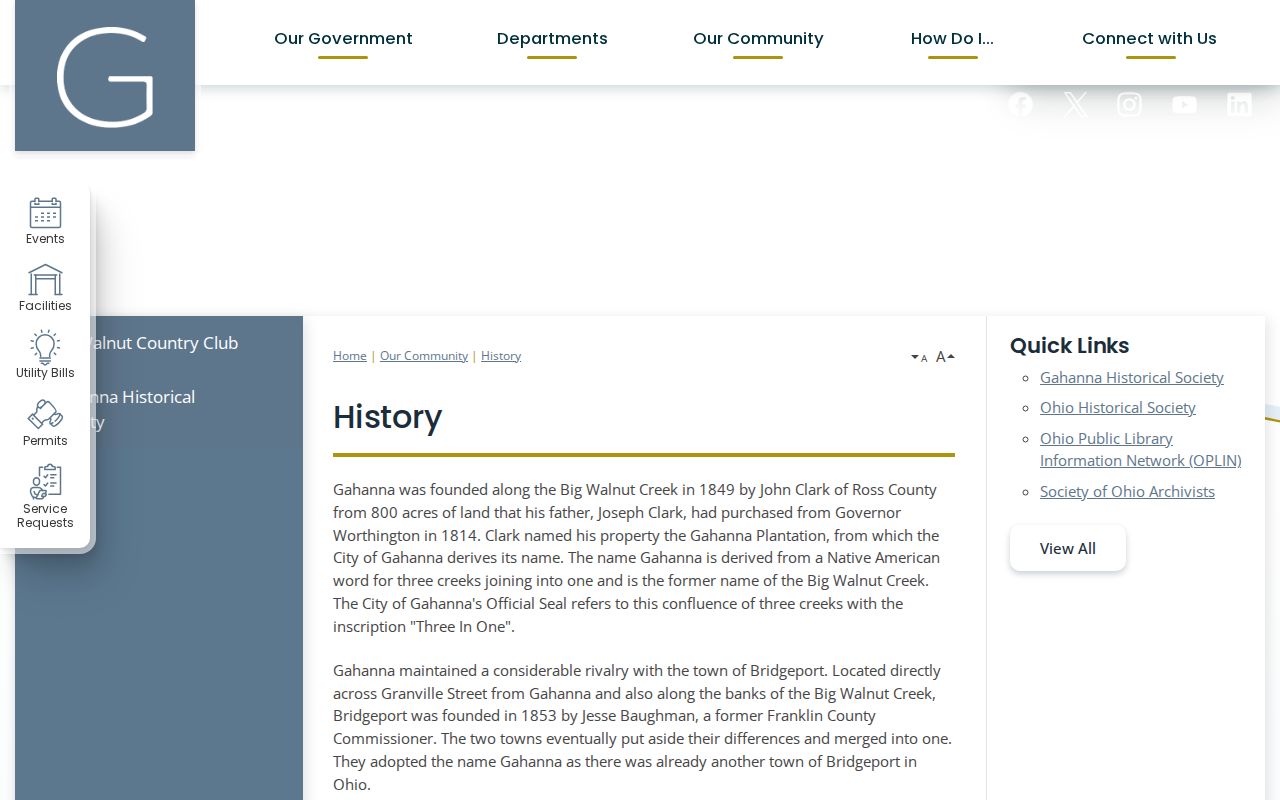
Some early Gahanna research will use a different locality label. The City says Gahanna was founded in 1849, Bridgeport was founded across Granville Street in 1853, and the communities later merged under the Gahanna name. Incorporation followed in 1881. Those dates help explain why an early family or address may appear in a Franklin County or Bridgeport-area record instead of a standalone Gahanna listing.
The City's Gahanna history gives the local timeline behind that record geography.
Checking the historical community name alongside the directory date can make a search more precise without claiming that a modern city boundary governed every old listing.